How the Two of Swords feels from the inside
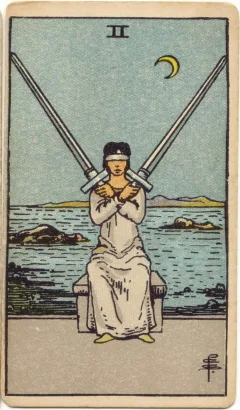
A woman sits on a stone bench by the sea, blindfolded, with two long swords crossed over her chest. Behind her, the water is calm and dotted with rocks, and a pale crescent moon hangs above. Her posture is still, almost too still, as if moving would force a choice.
That is the feeling this card carries: guarded, balanced, and undecided. Someone shown here is not cold. They are protecting their heart while they think, and the blindfold suggests they may be refusing to look at information that would tip the scale.
Upright: careful neutrality
In practice, upright Two of Swords feelings show up as polite distance. Messages are friendly but measured. Plans get suggested but not quite confirmed. The person might say they “need to think,” and they mean it.
There is respect in this. They are not rushing into something they are unsure about. The limit is that deliberation can stretch on, and the longer it lasts, the more it starts to feel like an answer in itself. Notice whether the weighing seems active or has become a comfortable way to avoid deciding.
Reversed: the swords get too heavy
Flipped, the card shows arms that can no longer hold the pose. Too many considerations, too much input from friends, too many feelings at once. Some people go silent here; others make a snap decision just to end the tension.
If you are on the receiving end, try not to read sudden withdrawal as a final statement. Overload makes people avoid even conversations they want to have. Kindness here looks like lowering the stakes: one simple question rather than a list of grievances.
It also helps to check whether the overload is partly yours. If you have been sending long messages, asking for reassurance daily, or bringing friends’ opinions into it, the other person may be juggling your swords along with their own. Setting some of that down can give both of you more room to breathe.
The Two of Swords as feelings from an ex
For an ex, this card suggests mixed feelings held in a tight standoff. Part of them may miss you; part of them remembers why it ended. They may check in occasionally, then retreat, without resolving which side wins.
The card cannot say whether the standoff will end in reconnection or in a final goodbye. It only shows that the question is still open for them. Whether you want to wait while they decide is a separate question, and it belongs to you.
In a situationship
This is one of the most recognizable cards for a situationship. Two people meet often enough to feel something, but nobody names it, and both keep their swords crossed. Each may be waiting for the other to lower their guard first.
If that sounds familiar, the card is pointing at a mutual stalemate rather than a one-sided one. Someone eventually has to take the blindfold off, and it does not have to be the person with more to lose.
Breaking a quiet standoff
Ask one direct, low-pressure question within the next two weeks: “What are you hoping this turns into?” Then listen without negotiating. Separately, write down the point at which you would rather have a clear no than an open maybe. Knowing your own limit makes the waiting feel less like drifting.